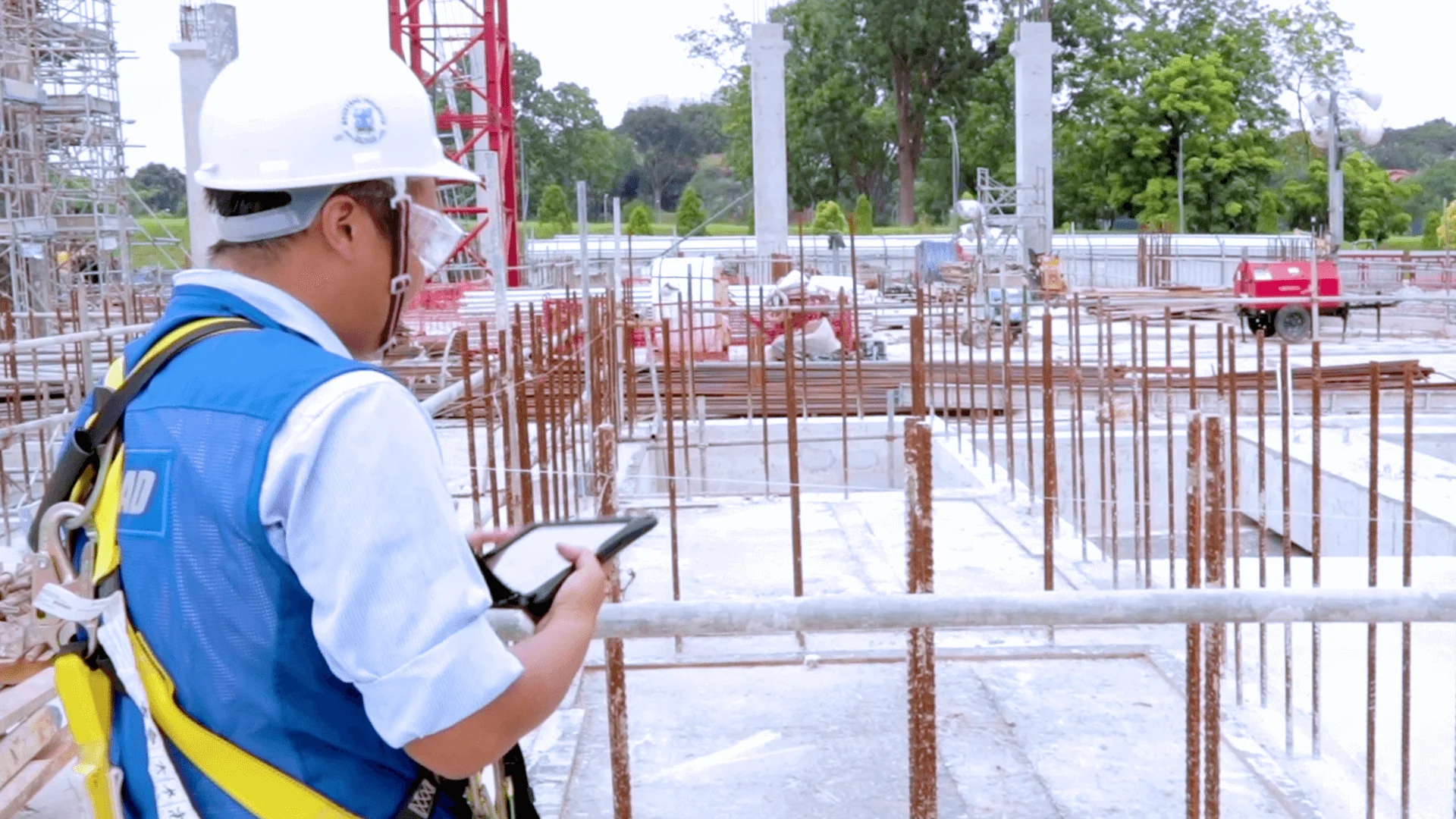

Digital tools are now widespread in the construction industry. From mobile forms to drones and sensors, construction teams are generating more field data than ever before. Collecting data, however, is only the first step. The real opportunity lies in using that information to make better decisions, reduce risk, and improve efficiency.
AI in construction uses technologies such as generative AI, computer vision and machine learning to automate tasks, analyse field data, identify risks and support better decisions. Common AI applications in construction include safety monitoring, quality control, progress tracking, reporting, scheduling and predictive maintenance.
Artificial intelligence in construction is already moving from experimentation to practical deployment. This article explains what AI in construction is, how it is used and what organisations need to turn it into operational value.

What is AI in construction?
In simple terms, AI refers to technologies that enable machines to perform tasks that usually require human intelligence. In construction, three categories are especially relevant today:
- Large Language Models (LLMs): Understand and generate text. Useful for chatbots, summarising reports, drafting documents, and helping teams retrieve information quickly.
- Computer vision: Analyses images and video. Helpful for monitoring progress, identifying safety risks, and detecting quality issues.
- Machine learning (ML) and predictive models: Detect patterns in historical or live data to make predictions, such as delay risks, safety incidents, or equipment failures.
Comparison of AI technologies in construction
| Type of AI | Designed for | Strengths | Limitations |
|---|---|---|---|
| LLMs | Content creation, report review, chat assistance, document search | Fast to deploy, cost-effective, strong productivity gains for text-heavy workflows | Can hallucinate or produce inaccurate answers without validation |
| Computer vision / Video AI | Site monitoring, safety compliance, access control, visual inspections | Real-time visibility, non-intrusive visual monitoring, scalable oversight | Camera infrastructure can be costly, accuracy is not perfect, privacy must be managed carefully |
| Predictive models | Forecasting safety risks, delays, cost overruns, equipment failures, and quality issues | Strong decision support when trained on good data, useful for planning and prioritisation | Requires reliable datasets and ongoing review as site conditions evolve |
How is AI used in construction?
AI in construction management is being applied to activities where teams need to process large volumes of information, identify risks or automate repetitive work. The most practical AI use cases in construction today include safety, quality, progress tracking, reporting and asset management. These AI applications can help project teams improve visibility, reduce repetitive work and support better project outcomes.
Safety compliance and risk management
Construction sites are inherently risky environments, and ensuring safety compliance remains a top priority. AI supports this through video analytics and predictive risk models. Video AI can analyse live CCTV or site footage to identify safety violations such as missing PPE or restricted-area access, while predictive analytics uses historical incident data to flag high-risk activities, teams or locations before issues escalate. The International Labour Organization also highlights the growing role of AI, smart sensors and digital technologies in improving workplace safety through better monitoring and earlier risk detection. Together, these AI-powered capabilities can improve safety and compliance, enable faster intervention and help reduce incidents.
Quality control and compliance
Maintaining quality across complex construction projects is a constant challenge. Computer vision can analyse photos and video to identify anomalies such as cracks, water damage or surface defects. Large language models can then summarise inspection findings and help standardise reports, reducing administrative effort. By helping teams identify defects earlier and document them more consistently, AI-driven quality processes can strengthen quality control and support faster handover preparation.
Progress tracking and forecasting
AI offers new ways to measure construction progress and anticipate future delays. Computer vision can analyse site photos and drone footage to compare completed work against planned milestones. AI can also assess site diaries, schedules and daily reports to detect discrepancies and forecast likely schedule slips. This gives project managers and project teams faster reporting, earlier warnings and better visibility across construction projects.
Predictive maintenance and asset monitoring
Predictive maintenance helps prevent equipment failures that can interrupt work and increase costs. AI can analyse machinery and sensor data to identify abnormal patterns in temperature, vibration or equipment use before a breakdown occurs. This allows teams to schedule servicing earlier, reduce unplanned downtime and extend equipment life. The result is better maintenance planning and a stronger return on equipment investment.
From safety and quality to scheduling and maintenance, AI is already proving its value across the construction lifecycle. The most effective platforms are the ones that integrate these capabilities into real workflows instead of treating AI as a standalone add-on.
The main benefits of AI in construction are faster access to information, earlier identification of risks, less repetitive administrative work, better visibility across projects and more consistent decision-making. The value is greatest when AI is connected to trusted field data and existing construction workflows.
What’s needed to make AI work on site?
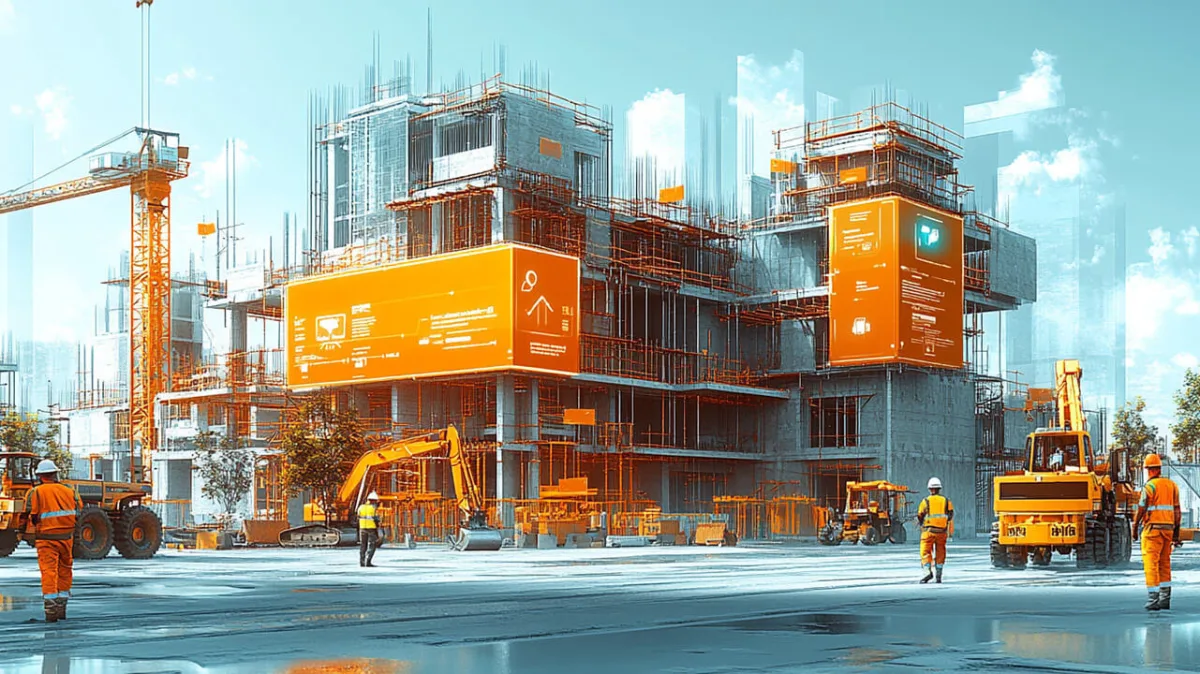
AI offers enormous potential, but success depends on more than powerful algorithms. To unlock value in construction, organisations need the right operational foundations. Four foundations matter most:
- Reliable data: Field information must be accurate, structured and captured consistently.
- Connected workflows: AI should be embedded into the mobile applications, dashboards and reports teams already use.
- Practical user experience: AI tools must be simple, explainable and relevant to daily work on site.
- Governance and human oversight: Organisations need clear rules for data access, security, accountability and the validation of AI outputs.
These foundations determine whether an AI pilot remains isolated or becomes useful across multiple construction projects. For a deeper executive framework, explore AI readiness in construction.
The future of AI in construction
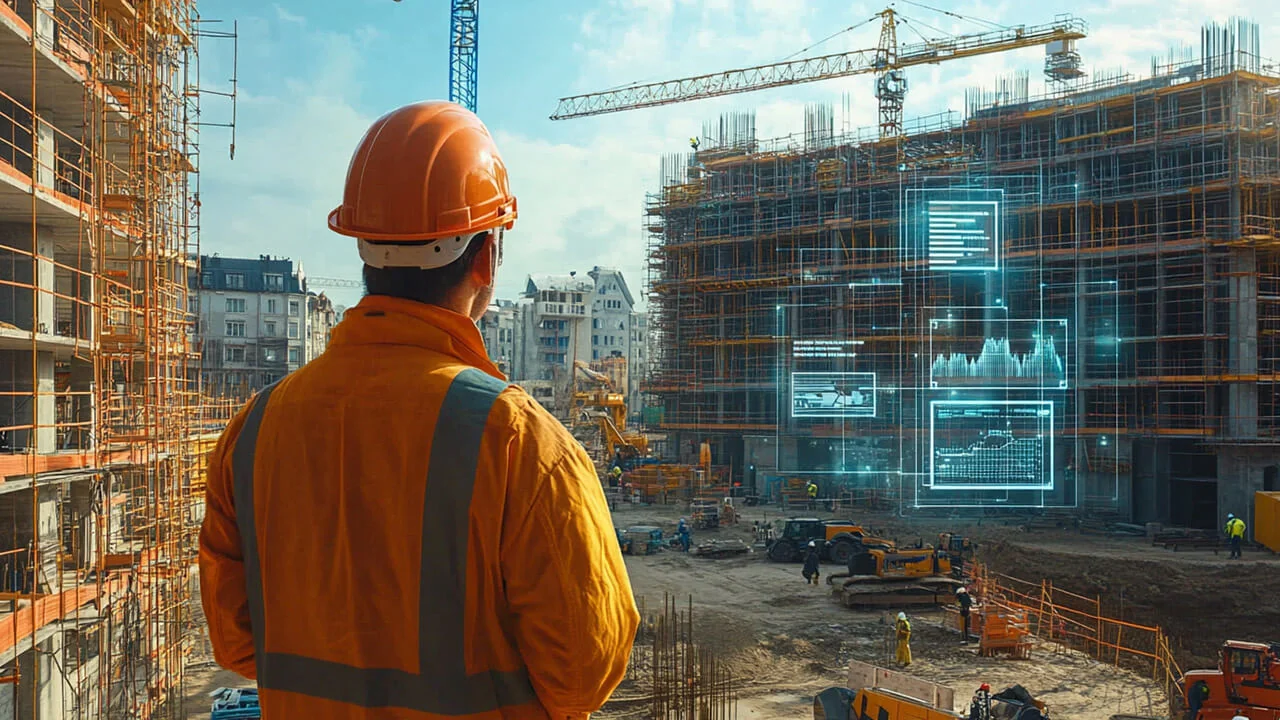
As AI technologies mature, the construction industry will move beyond isolated applications towards connected and intelligent job sites. The future of AI in construction will be shaped by the combination of trusted field data, connected systems and tools that support people directly within their daily workflows.
Connected and intelligent job sites
AI will increasingly work alongside IoT sensors, mobile applications and BIM models. Sensors and field systems can capture real-time information about equipment, site conditions and progress. AI can analyse this data, while BIM provides the project and spatial context needed to understand its impact. Together, these technologies will help construction teams monitor construction sites more accurately, identify emerging risks earlier and respond with greater precision.
AI copilots for construction teams
AI copilots will make project information easier to access and use. A supervisor could request a summary of the day’s highest-priority safety risks, while a project manager could receive an overview of progress, delays and actions requiring attention. Quality teams could also use AI to review inspection records, photos and other field evidence.
These tools will not replace construction professionals. They will reduce repetitive administrative work, support better decisions and give teams more time to focus on field execution.
Smarter planning and coordination
AI will also play a greater role in construction scheduling and coordination. By analysing historical and real-time project data, models could identify likely delays, highlight resource conflicts and help teams develop more realistic plans. Human oversight will remain essential. AI recommendations should be transparent, auditable and applied within clear governance frameworks, particularly when workforce, safety or video data is involved.
The future of AI in construction is not about removing people from the process. It is about giving construction teams better information, earlier warnings and more effective tools to help them build safer, faster and better.
From AI applications to operational value
AI in construction is moving rapidly from experimentation to practical use. However, the advantage will not come from deploying the greatest number of AI tools. It will come from applying the right AI use cases to trusted field data and well-designed construction workflows.
The technology matters, but the quality of the data, processes and decisions behind it will ultimately determine its value.
Explore related Novade solutions