
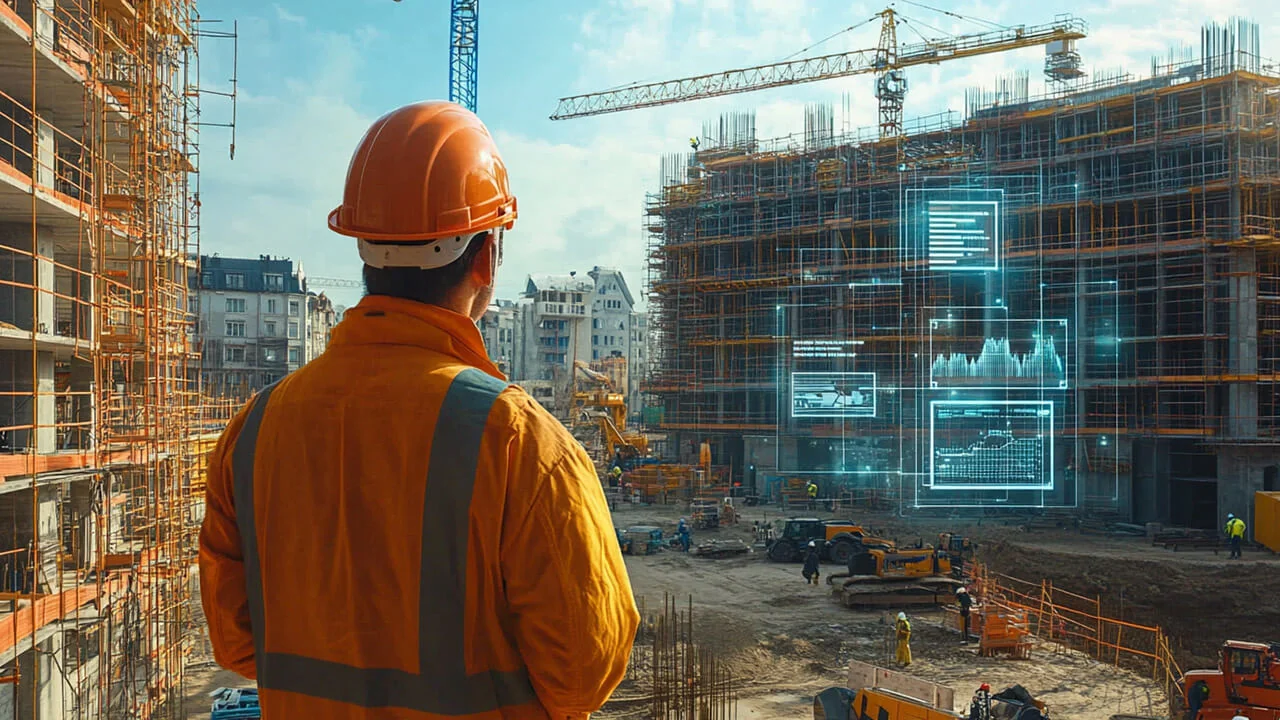
Construction safety technology is changing how contractors manage risks, collect site data and prevent incidents. Mobile safety apps, connected wearables, video analytics and AI are giving construction teams new ways to identify hazards and make faster, data-driven decisions. In this article, we explore five key construction safety technology trends shaping safer construction sites in 2026.
Safety apps create better construction data
Mobile safety applications streamline safety-related processes. Activities may include risk assessments, inspections, permits to work, tool box meetings or incident reporting.
Safety apps first appeared more than a decade ago as mobile devices were becoming more common and affordable. Since then, they have improved significantly. Good safety apps are user-friendly and can be accessed from any device, even without an internet connection. The best apps offer full configuration, allowing them to fit the way workers operate in the field.
The benefits extend beyond compliance and process control. Safety mobile apps can gather precise and timely information from the job site. This is increasingly important as analytics and AI depend on accurate, structured field data. As construction companies seek better insights into safety performance, mobile apps are becoming an essential source of trusted site data.
Digital construction safety software can connect these field workflows, creating a consistent source of information for reporting, analytics and AI.

AI enables more tailored safety training
Many workplace accidents happen because workers are either too familiar with a task or lack experience. Digital solutions can assist in managing employee training requirement and monitoring adherence.
Have construction workers undertaken the necessary site inductions? Based on their level of experience and background, what training will help them perform their jobs and keep them safe? The best safety software helps manage credentials, certificates, and prior records. Learning management systems are also employed to streamline training procedures.
An emerging trend in construction safety technology is the creation of custom training content, powered by generative AI. This tailored training makes learning more relevant and engaging for workers. By creating examples, scenarios and case studies based on real site situations, companies can better equip employees to adopt safety procedures. This strategy allows them to connect their training to real-world situations.
However, AI-generated training content still requires human oversight. Safety professionals should review and validate materials before they are used in the field to ensure they are accurate, relevant and compliant with company procedures.
As generative AI tools improve, personalised and role-specific safety training is likely to become increasingly common across construction organisations.
Wearable construction safety technology becomes more affordable
A ‘wearable’ is any device that is worn to keep workers safe. It can be as simple as a smartwatch that monitors health indicators, or as advanced as a “smart vest” that works like an airbag in a car, protecting a worker in the event of a fall.
Wearable technology has evolved over the past decade, but high costs have limited its usage to high value applications. In some areas, we are reaching inflection points where these devices start to be affordable. Connecting these devices to mobile apps and using the collected data for AI models is now adding extra value.
For example, smart safety shoes with sensors can track the wearer’s posture and movements. They can alert workers to unsafe positions or movements that may increase the risk of injury, helping organisations identify ergonomic risks before they lead to incidents.
Smart helmets are also advancing rapidly, enhancing safety with new, data-driven capabilities. One of the leaders in this space is Beeinventor. Its Dasloop smart safety helmet features an anti-shaking camera for real-time video capture and streaming via 4G LTE or WiFi. It supports live calls and video conferencing for remote inspections, with cloud-based storage and integrated audio capabilities supporting communication between field and remote teams.
As hardware becomes more affordable and organisations look for new sources of real-time safety data, connected wearables are likely to play a larger role in construction safety management.

Video analytics improves real-time site safety
Video analytics tools use AI and computer vision to continuously analyse activity on construction sites. For instance, they can spot when unauthorised individuals enter restricted zones or when workers fail to wear required personal protective equipment (PPE). They can also detect when workers are too close to moving vehicles.
By analysing real-time video from cameras, these tools can quickly identify dangerous situations and alert safety teams so they can respond more rapidly.
These systems are developing quickly, but successful deployment depends on accuracy, appropriate camera coverage and clear operating procedures. They also need to comply with data protection and privacy requirements and be implemented in a way that is transparent to workers. Companies active in this area include Invigilo and Ailytics.

AI helps predict construction safety risks
One of the most important developments in construction safety technology is artificial intelligence. AI can analyse large volumes of safety information, identify patterns and help teams recognise risks that might otherwise be difficult to detect.
Imagine being able to look at past safety data to anticipate where risks may emerge next. Information about workers’ experience, site conditions, equipment, previous incidents and project characteristics can be analysed together to identify patterns associated with higher safety risk.
These insights can help safety teams focus preventive actions where they are most needed, moving safety management from reactive reporting towards proactive risk management.
The technology is still evolving, but practical applications are already emerging. Novade has developed AI models that can predict risks with an 80% accuracy rate.
As construction companies collect larger volumes of structured field data, AI is likely to become an increasingly important tool for identifying risk, prioritising interventions and preventing incidents.
Using technology to improve safety on sites
We have looked at five important trends in construction safety technology: data-driven mobile apps, AI-powered training, connected wearables, video analytics and predictive AI models. These construction safety innovations can improve compliance and efficiency while helping companies identify and manage risks more effectively.
Technology alone cannot create a safe workplace. Effective safety management still depends on strong processes, competent people and a positive safety culture. But when these foundations are combined with reliable field data and the right digital tools, construction companies can make faster decisions and take a more proactive approach to preventing incidents.
Related articles
Introduction to safety management system
A safety management system provides a structured approach to maintaining a safe, compliant and efficient workplace. This guide explains what a safety management system…
How to use AI in construction: A readiness framework for executives
AI in construction is moving from experimentation to executive priority. Boards are defining AI strategy. Executives are evaluating high-impact use cases. Operations teams are…

Will AI simplify construction compliance or increase bureaucracy?
The original purpose of regulation Regulation in construction exists for good reasons: to reduce risk, protect people, safeguard the environment, and ensure accountability. However,…