

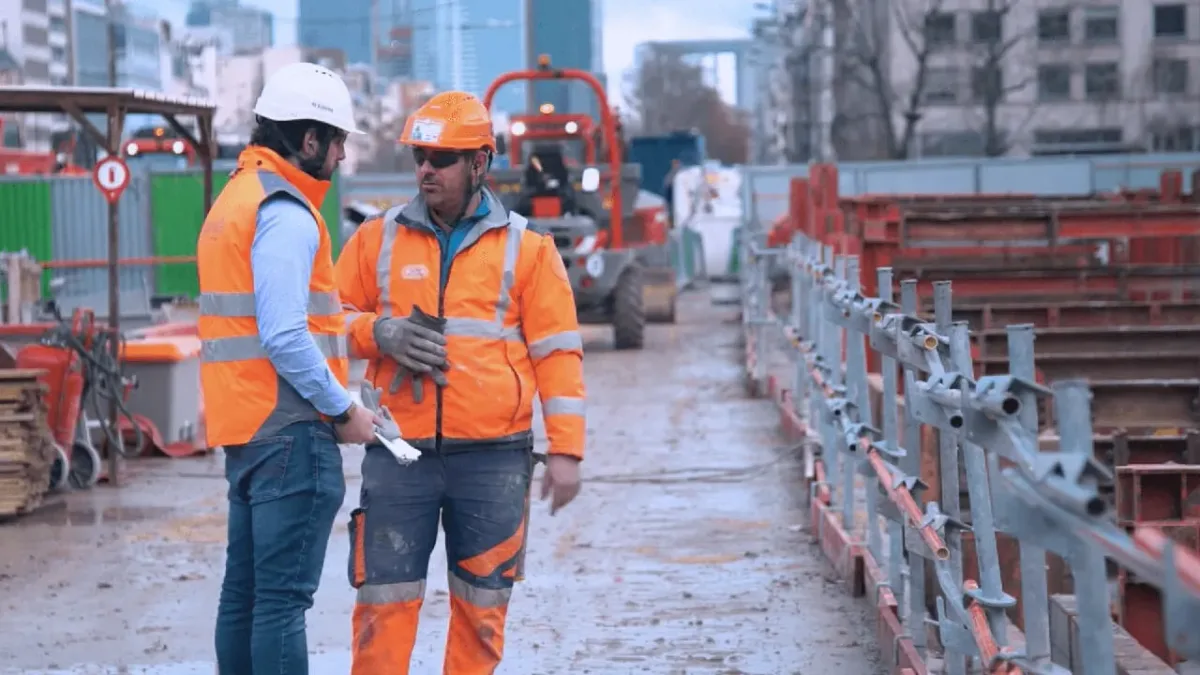
Construction remains Malaysia’s most dangerous sector for fatal workplace injuries. According to the Department of Statistics Malaysia (DOSM), the construction sector recorded 88 fatal occupational injuries in 2023, up from 72 in 2022 and the highest of any sector, with falls and machinery accidents among the main risks. For contractors, the impact goes beyond the incident itself: a weak safety record can affect tender eligibility, client prequalification and project timelines.
Construction safety in Malaysia is no longer only about completing checklists or reacting to incidents. Project teams are expected to manage safety and health systematically, maintain reliable records, coordinate responsibilities across the project lifecycle and demonstrate that controls are working on site. For contractors and developers, SHASSIC provides a recognised way to assess safety and health performance, while Malaysia’s occupational safety and health laws and CIDB requirements establish the wider compliance framework.
This guide explains SHASSIC, its place within occupational safety and health in Malaysia, and the key regulations construction teams should know. It also explores how Novade HSE software can help construction teams digitise safety processes, from inspections and risk assessments to permits, incident reporting and corrective actions.

What is SHASSIC?
SHASSIC, or the Safety and Health Assessment System in Construction, is CIDB Malaysia’s independent method for assessing and evaluating the safety and health performance of contractors on construction projects. The current framework is based on Construction Industry Standard CIS 10:2020.
A SHASSIC assessment looks at three main components: document checks, workplace inspections and employee interviews. This is important because good safety performance is not demonstrated by documents alone. Procedures need to be reflected in actual site conditions, and workers need to understand the controls that apply to their work. Based on the overall score, projects receive a star rating from 1 to 5. A strong rating can support a contractor’s position in tenders and client prequalification.
SHASSIC is an assessment framework — not a substitute for legal compliance
SHASSIC can help organisations benchmark and improve occupational safety and health performance, but it should not be treated as a standalone legal compliance certificate. CIDB’s own guidance states that parties involved in a project remain responsible for meeting applicable legislation, approved standards, codes of practice, guidelines, specifications and contractual requirements.
SHASSIC, HSSE and occupational safety and health in Malaysia
HSSE—Health, Safety, Security and Environment—is broader than a single assessment. In construction, it brings together the systems, people and evidence used to manage workplace risks, site access and security, environmental responsibilities, high-risk activities, incidents and continual improvement.
SHASSIC fits naturally within this wider approach because its assessment examines whether safety and health management is documented, visible in the workplace and understood by personnel. For an HSSE team, that means the strongest preparation is not a last-minute audit exercise. It is a consistent operating system for how work is planned, approved, performed, inspected, corrected and recorded.
Key construction safety regulations and standards in Malaysia
The exact requirements depend on the project, activities and hazards involved. However, the following are particularly relevant when building a Malaysia-focused construction safety framework.
1. Occupational Safety and Health Act 1994 (Act 514)
Malaysia’s OSHA provides the overarching occupational safety and health framework. The OSH (Amendment) Act 2022 (Act A1648), in place since 1 June 2024, introduced a mandatory risk assessment duty: employers, self-employed persons and principals must assess safety and health risks that may affect people at the workplace and implement controls where needed. For construction teams, this reinforces the need for risk assessments to be active working documents rather than static files. The amendment also raised maximum penalties to RM500,000 and requires employers with five or more employees to appoint an OSH coordinator.
2. Occupational Safety and Health (Construction Work) (Design and Management) Regulations 2024
Introduced on the same day as the OSHA amendment, the CDM Regulations 2024 came into operation on 1 June 2024 and apply to places of work where a project is carried out. They strengthen the focus on managing safety and health from planning and design through the construction phase, with defined responsibilities and project safety-and-health information. This makes coordination, traceability and timely information sharing increasingly important across project stakeholders.
3. CIDB Act 520 and construction personnel requirements
CIDB requirements sit alongside occupational safety and health legislation. Contractors carrying out construction work in Malaysia are generally required to register with CIDB, while construction personnel must meet applicable registration requirements. CIDB also requires recognised construction safety certification for personnel registration, reinforcing the importance of induction, competency and workforce records.
4. CIS 10:2020 — Safety and Health Assessment System in Construction (SHASSIC)
CIS 10:2020 provides the current SHASSIC assessment framework. For teams preparing for SHASSIC, the practical focus should be on maintaining consistent evidence across management documentation, site conditions and workforce understanding.
5. Other activity-specific OSH requirements
Depending on the work scope, other regulations may apply—for example requirements covering hazardous chemicals, noise exposure, accident and dangerous-occurrence notification, safety and health committees, or plant requiring certificates of fitness. The safest editorial approach is to present these as examples and remind readers that applicability depends on the project and hazards.
6. Environmental requirements within HSSE
The “E” in HSSE should not be overlooked. Where construction activities generate scheduled waste, Malaysia’s Environmental Quality Act 1974 and Environmental Quality (Scheduled Wastes) Regulations 2005 establish requirements for its management. Projects may also have other environmental obligations depending on their activities and approvals.
What good SHASSIC and HSSE readiness looks like on site
A project may have comprehensive procedures, but assessors and safety leaders ultimately need evidence that those procedures are being applied. Strong readiness therefore comes from repeatable controls that connect planning, field execution and follow-up.
- Risk assessments are current, accessible and linked to the work being performed.
- Safety inspections and audits are completed consistently, with observations assigned and closed out.
- Inductions, toolbox meetings and briefings are recorded and can be retrieved easily.
- High-risk work is controlled through clear permit-to-work workflows and supporting competency or equipment records.
- Incidents and near misses are reported promptly, investigated and followed by corrective actions.
- Management has visibility of recurring hazards, overdue actions and safety trends across projects.
- Workers can explain the key hazards and controls relevant to their tasks—not simply sign an attendance sheet.
How HSE software can support SHASSIC and construction safety
HSE software and construction safety management software do not replace legal duties, competent safety professionals or the SHASSIC assessment process. Their value is in making the underlying controls easier to standardise, execute and evidence. A digital platform can connect field activities with the records safety teams need for day-to-day management, internal reviews and SHASSIC readiness.
| SHASSIC component | What assessors look for | How Novade helps |
|---|---|---|
| Document check | Current, complete records | Centralised, version-controlled forms and reports |
| Workplace inspection | Controls visible on site | Mobile inspections with photos and tracked actions |
| Employee interview | Workers understand hazards and controls | Recorded inductions, toolbox talks and credentials |
Digitise inspections and audits: Use configurable mobile checklists for routine inspections, environmental audits, equipment checks and other site controls. Photos, comments, timestamps and assigned actions create a clearer audit trail than disconnected paper records.
Keep risk assessments and field controls connected: Structured digital workflows can help teams capture hazards, controls and supporting documents in a consistent format and make approved information easier to access from the field.
Control high-risk work with digital permits: Permit-to-work workflows can support activities such as hot work, work at height, confined spaces and lifting by routing submissions, checks and approvals while maintaining traceable records.
Track induction, competency and credentials: Centralised workforce records help teams verify whether personnel have the required induction, skills or certificates and can support reminders when credentials are approaching expiry.
Close the loop on observations and incidents: Safety observations, incidents and corrective actions can be assigned to responsible parties, tracked to closure and analysed for recurring trends.
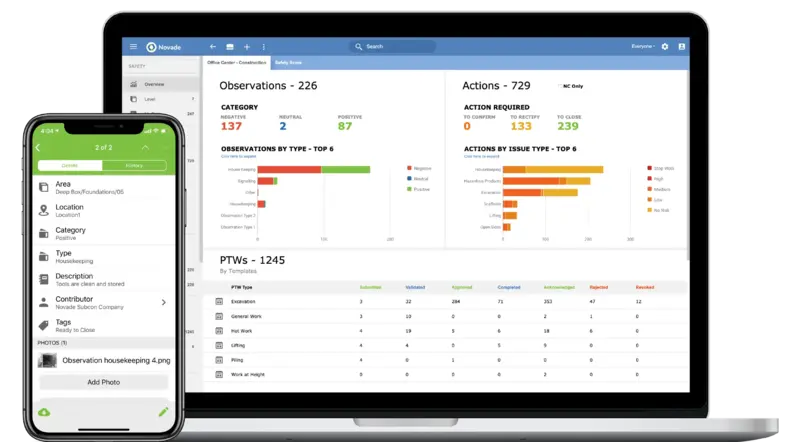
Turn site data into management visibility: Dashboards allow HSE leaders to monitor leading indicators such as inspection activity, open actions, permit status and recurring hazards across projects instead of waiting for month-end manual consolidation.
Improve SHASSIC readiness and construction safety with Novade
Novade HSE is construction safety software designed to help teams digitise and control site-safety processes in one platform. Instead of managing SHASSIC-related evidence across paper forms, spreadsheets and separate systems, teams can manage risk assessments, site access, inspections, inductions, toolbox meetings, audits, credentials, permits to work and incident reports, while safety managers track corrective actions and performance through dashboards.
For Malaysian contractors and developers working toward stronger SHASSIC and HSSE performance, digital HSE management is not about creating more paperwork. It is about building a reliable trail that shows what was planned, what happened on site, what was identified and what was done next – while giving project and safety teams access to the same current information.
By standardising safety workflows and making field data easier to capture and analyse, Novade can help project teams spend less time chasing records and more time improving the controls that protect workers. This also makes it easier to retrieve evidence, follow up actions and monitor construction safety performance across multiple projects.
Related content
Safety inspection app
Safety inspection software & mobile app Simplify compliance, inspections, and audits on your jobsites Free for up to 5 users and 5 projects Get…
Achieve a high QLASSIC score with a quality control checklist app
In the dynamic landscape of the construction industry, ensuring the highest standards of quality is paramount. The Construction Industry Development Board (CIDB) Malaysia has…