

A broken window, water leakage, and leftover debris are some of the common problems found on construction sites before the handover. No project is perfect, and touch-ups or repairs are often required before closeout or handover.
A formal construction punch list is typically prepared as a project approaches substantial completion. However, identifying and correcting defects throughout construction can reduce delays and outstanding work at the end of the project.
A walkthrough with the owner, contractor and other stakeholders helps identify the remaining work. Also known as a defect list, deficiency list, snag list or punch-out list, the punch list records items that must be corrected before final completion.
What is a construction punch list?
A construction punch list, also called a deficiency list, defect list or punch-out list, identifies incomplete work, defects and other items that need to be corrected before project closeout and handover.
Did you know that the term punch list comes from the former process of punching holes in a list to mark which items needed fixing?
In construction contracts, punch list items generally cover minor outstanding work identified when a project is substantially complete. Depending on the contract, completing these items may be required before final payment and project completion. Thomson Reuters provides a more detailed contractual definition of punch lists and their role in project completion and final payment.
Contents of a punch list
A punch list records work that does not meet contract requirements or remains incomplete. It may include damaged finishes, incorrect installations, missing items or systems that do not operate as required.
Most punch list items are relatively minor because major quality issues are normally addressed earlier through other processes, such as change orders or non-conformance reports (NCRs). The challenge is often the volume of small items that must be closed before completion.
Managing a punch list: roles and responsibilities
Project structures vary, but the following roles are typically involved in managing punch lists:
Project owner
Reviews completed work, identifies unfinished or defective items, and confirms that corrections are completed before final sign-off.
General contractor
Reviews the punch list, assigns items to subcontractors, coordinates corrective work and tracks progress through to closure.
Subcontractors
Complete assigned punch list items, provide updates or evidence, and prepare corrected work for verification.
Architects and designers
Review complex issues against design or contract requirements and support final verification where specialist approval is needed.
Best practices
Start early: Begin the punch list early in the project, adding tasks as sections are completed. Fixing issues early typically avoids delays at the end.
Conduct regular inspections: Perform periodic quality controls throughout the project to ensure high-quality work. Use consistent checklists and compare work against agreed project requirements and construction quality standards.
Assign responsibilities: Assign each job on the punch list to a specific team member with clear deadlines. Ensure that all project managers know their responsibilities and timelines to keep the project on track. Ownership and accountability are crucial.
Maintain clear communication: Keep open lines of communication between all parties involved. Regular updates and feedback can prevent misunderstandings and ensure that everyone has clear visibility of outstanding work.
Prioritise tasks: Categorise and prioritise tasks on the punch list based on urgency and importance. This helps teams address critical issues first and avoid overlooking essential work.
Use a punch list app: Choose a construction punch list app that keeps your team on schedule and allows easy tracking of issues from the field. A mobile-friendly, cloud-based solution is ideal for team access via tablets and smartphones.
What is a punch list app?
A punch list app is a digital tool used to record, assign, track and close construction defects and outstanding work. Site teams can capture issues with photos, assign responsibilities and due dates, monitor status and maintain a complete record through project handover or closeout.
Compared with spreadsheets or paper lists, punch list software gives project teams one shared view of outstanding work and helps keep information up to date as items move towards closure.

Top 8 reasons why you need a punch list app
- Improved team productivity: Keep punch list items, photos, responsibilities and status updates organised in one place.
- Real-time updates: Track due dates and item status as work progresses, helping teams respond faster and reduce delays.
- Enhanced communication: Give owners, contractors and subcontractors one shared view of outstanding issues and their status.
- Increased accountability: Assign every punch list item to a responsible person with a clear deadline.
- Better project records: Keep photos, comments, approvals and supporting documents linked to each punch list item.
- Reduced dispute risks: Maintain an auditable record of actions, approvals, digital signatures and status changes.
- Reduced costs: Spend less time administering, chasing and reporting on outstanding work, helping reduce the costs associated with project closeout.
- Speed up final completion: Close defects faster and give stakeholders clear visibility of what remains before before final completion.
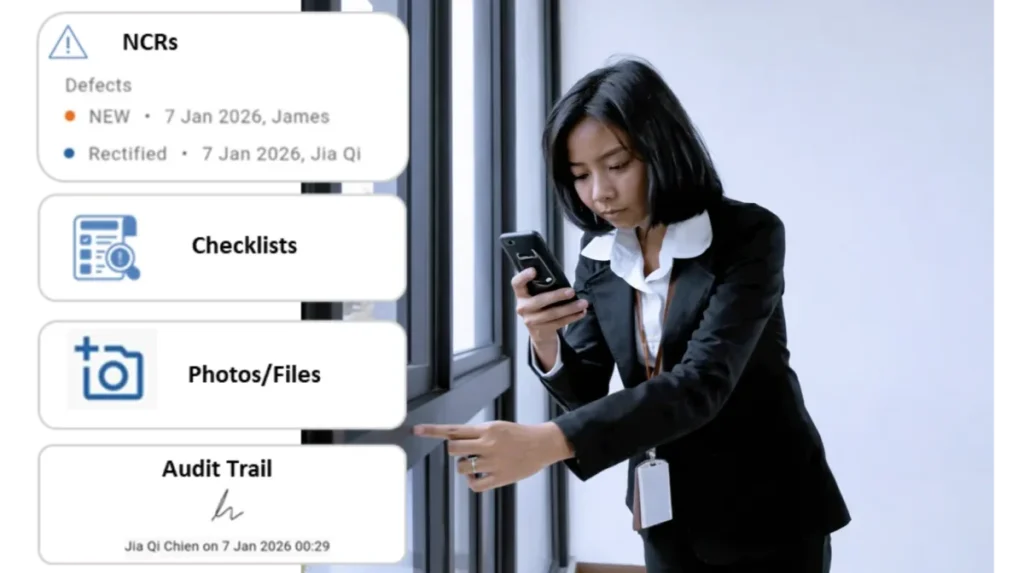
“Adopting a digital tool really helps in terms of time, paperwork and coordination with the main contractor.” – Steven Tiau, Resident Engineer, CEL Development
Choose the right punch list software
A good punch list app should be simple for field teams to use and flexible enough to match the way your projects operate. Look for mobile access, offline working, configurable punch list templates, user permissions and real-time status tracking.
The value should extend beyond closing individual punch list items. Dashboards and analytics can help project managers understand where defects occur, compare performance across contractors and identify recurring quality issues.
Novade construction quality management software helps contractors, developers and site teams digitise punch lists, track defects and manage project closeout and handover. Teams can capture issues in the field, assign corrective actions, monitor progress and use quality data to improve future projects.
Related content


Snagging inspections: how to identify, track and close defects before handover
On complex construction projects, teams may need to manage hundreds or thousands of snags across buildings, areas, trades and subcontractors. A structured snagging process…

Benefits of digitalising the construction project handover procedure
Find out how deploying a construction app can lead to more satisfied customers, improved site visibility, and stronger contractor performance.