
In demanding UK industrial operations, particularly across construction, energy and manufacturing, high-risk activities are part of everyday work. A safety work permit system, commonly known as a Permit to Work or PTW system, provides a formal process for assessing, authorising and controlling certain high-risk activities. It can form part of an organisation’s wider arrangements for controlling risk and supporting health and safety compliance.
A well-designed Permit to Work system provides a critical checkpoint before high-risk work begins, helping teams confirm that hazards have been assessed, appropriate controls are in place and the work has been properly authorised.
What is the safety work permit system?
A safety work permit system is a formalised, documented process used to authorise specific types of high-risk work. In the UK, it is commonly employed across a range of industries and forms part of a wider safety management system, supporting compliance with UK laws and guidelines issued by the HSE.
Common activities where a Permit to Work system may be used include:
- Hot works (e.g. welding, grinding)
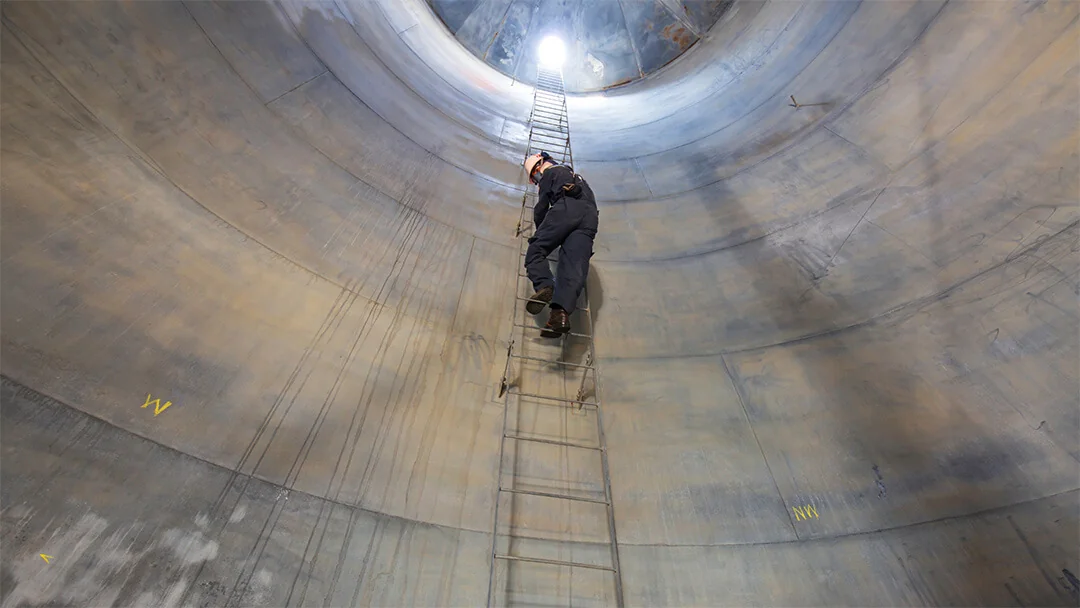
- Confined space entry
- Work at height
- Electrical work and isolation
- Work involving hazardous substances
- Lifting and other high-risk activities where additional controls are required
This system ensures that all necessary precautions are taken and that relevant stakeholders, including contractors and supervisors, are aware of the associated hazards and control measures.

Key components of a safety work permit system
- Risk assessment: Conducting a thorough risk assessment is a legal requirement in the UK. Under Regulation 3 of the Management of Health and Safety at Work Regulations 1999, employers must identify risks to workers’ health and safety. This feeds directly into the safety work permit, detailing the hazards and how they will be managed.
- Control measures: Control measures are developed based on the outcome of the risk assessment and must adhere to the hierarchy of control:
- Elimination
- Substitution
- Engineering controls
- Administrative controls
- Personal Protective Equipment (PPE)
- Authorisation: The permit should be authorised and issued by appropriately competent personnel in accordance with the organisation’s Permit to Work procedure.
- Communication: Clear communication and handover are vital. All personnel involved in the task must be briefed on the permit’s conditions. This aligns with UK best practices on toolbox talks and daily briefings.
Planning and preparation for high-risk work in the UK
Effective implementation of a safety work permit system begins with structured planning. This phase is foundational, ensuring that every high-risk task is thoroughly evaluated and that all necessary safety measures are in place before work commences. Below is a UK-adapted planning table:
| Step | Description | Key considerations |
|---|---|---|
| Work Planning | The initial stage where the scope of work is defined, including tasks, timelines, and involved personnel. | Consider duties under CDM 2015 where the work forms part of a construction project.es if construction-related |
| Hazard Identification | Systematic identification of all potential hazards associated with the work activities. | Consider relevant COSHH assessments, previous incidents and site-specific information. historical incident data |
| Risk Assessment | Evaluation of the identified hazards to determine their potential impact and the likelihood of occurrence. | Follow applicable UK health and safety requirements and HSE guidance. |
| Development of control measures | Formulation of strategies to eliminate or mitigate the identified risks, ensuring safe work conditions. | Controls should reduce risks so far as is reasonably practicable.K law |
| Permit application | Completion and submission of the PTW application form, detailing the work plan, hazards, risks, and control measures. | Include relevant emergency arrangements and task-specific requirements. |
Strategic implementation of safety controls
Once hazards are identified and the permit is authorised, it’s time to put those control measures into action.
Engineering Controls
Examples include:
- Temporary edge protection and other fall-prevention measures for work at height
- Gas detection in confined spaces
Administrative Controls
- Time restrictions on hazardous work (e.g. night shifts)
- UK-specific method statements and RAMS (Risk Assessment Method Statements)
- Safety briefings before work begins
Personal Protective Equipment (PPE)
PPE should be suitable for the task, properly maintained and comply with applicable product-safety requirements.
- Flame-resistant clothing (for hot works)
- Respiratory protection (for hazardous substance exposure under COSHH)
All PPE must be suitable for the task and regularly inspected.
Leveraging Novade for digital permit to work
While many companies have made the move to digital permits, not all systems are created equal. Where basic digital solutions simply replicate a paper form on a screen, Novade takes the process a step further, transforming it into a dynamic, data-rich system.
Novade Permit to Work software is designed to support complex permit workflows across construction, infrastructure and other high-risk operations. Instead of simply digitising permit forms, teams can configure workflows, connect risk controls and monitor permits across projects in real time.
Key benefits of Novade Permit to Work software:
- Smart conflict detection: Novade can automatically detect potential conflicts between permits.
- Competency and compliance checks: Novade can connect permit workflows with worker and asset information.
- Real-time communication and updates: Novade helps facilitate communication between stakeholders involved in the PTW process.
- Integrated risk assessments: Risk assessments can be connected directly to the PTW process.
- Comprehensive reporting and analytics: Safety managers and operations teams can access analytics and reporting tools to understand permit activity and areas requiring attention.
Permit data can also be combined with safety inspections, incidents and corrective actions within Novade construction safety software, giving teams a more complete view of safety performance across projects.

Conclusion
A Permit to Work system can play an important role in controlling high-risk activities across UK construction and industrial operations. When implemented effectively, it helps teams assess hazards, verify controls, coordinate work and maintain a clear record of authorisation.
Digital Permit to Work systems can strengthen these processes by connecting permits with risk assessments, worker credentials, equipment information and real-time field data. Novade helps organisations configure and digitise PTW workflows, improve visibility over high-risk work and connect permit management with wider construction safety processes.
Explore Novade to see how the platform supports connected field operations across safety, quality and other critical construction processes.
Enhancing construction site safety with CCTV cameras, mobile apps & AI