


Project Eole: How Eiffage Génie Civil, Bouygues Travaux Publics, and Razel-Bec enhanced efficiency with Novade
The consortium used the construction management software to gained greater visibility on site processes.
100 users
8,000 digital forms submitted
QR codes to monitor concrete type & use
Syncs with BIM
& 3D plans
Improved visibility
on-site
100 users
8,000 digital forms submitted
QR codes to monitor concrete type & use
Syncs with BIM & 3D plans
Improved visibility on-site
Overview

PROJECT
- Réseau Express Régional (RER) E also known as the Est Ouest Liaison Express or EOLE, which translates to East West Express Link
- Commenced in 2018 and expected to be completed by 2022
- Fifth RER line serving Paris and its suburbs
- Expansion of Line E westwards by 55km from its existing terminus in the Haussmann-Saint-Lazare railway station to the Nanterre La Folie station
- Includes the development of new tracks, 8km-long tunnel section between Haussman Saint-Lazare and Mantes-la-Jolie stations, 6.1 km tunnel under the Siene river
- Construction of three new stations at Porte-Maillot, La Défense-CNIT, and Nanterre-la-Folie
- Aims to improve service and connectivity to Paris for commuters of the Île-de-France region with increased frequency, speed and regularity of trains while optimising the use of infrastructure
- Designed to serve over 620,000 passengers daily with approximately 28 trains running per hour
ISSUES
- 400-500 workers on two sites: Gambetta and Porte Maillot stations
- Massive amount of time spent on completing paperwork, gaining approvals from superiors, and travelling from site to office for data submission
- Minimal real-time monitoring of on-site progress due to manual recording and duplicated data
- Lack of traceability for quality-related tasks
CONTRACTORS
- A joint venture between Eiffage Génie Civil, Bouygues Travaux Publics, and Razel-Bec
SOLUTIONS
GOALS
- Streamline and automate site processes
- Digitise paper processes to reduce time spent on completing, submitting, and managing paperwork
- Implement a single construction quality management software to enforce high standards and monitor the rail infrastructure project
- Deploy a solution which caters to the different needs on the large-scale railway project
OUTCOMES
- Improved speed and efficiency with administrative work completed autonomously on-site
- 8,000 forms completed and submitted using mobile devices in real time
- By scanning QR codes, teams receive immediate notifications with details on concrete type and use
- Novade’s single site management platform seamlessly syncs documentation, BIM system, and 3D plans
- Improved visibility on site processes in real time as supervisors receive daily progress reports with visual representations
- Enhanced traceability for project directors who can easily access all controls conducted and keep track of project’s status
Connecting the Seine to Paris
Eiffage Génie Civil is a trailblazer in the construction industry
Foreseeing the need to digitalise its site processes for better visibility and traceability in real time, Eiffage Génie Civil engaged Novade, a construction management software developer for its Quality and Activity modules, to enforce high quality standards and keep track of the rail infrastructure project.
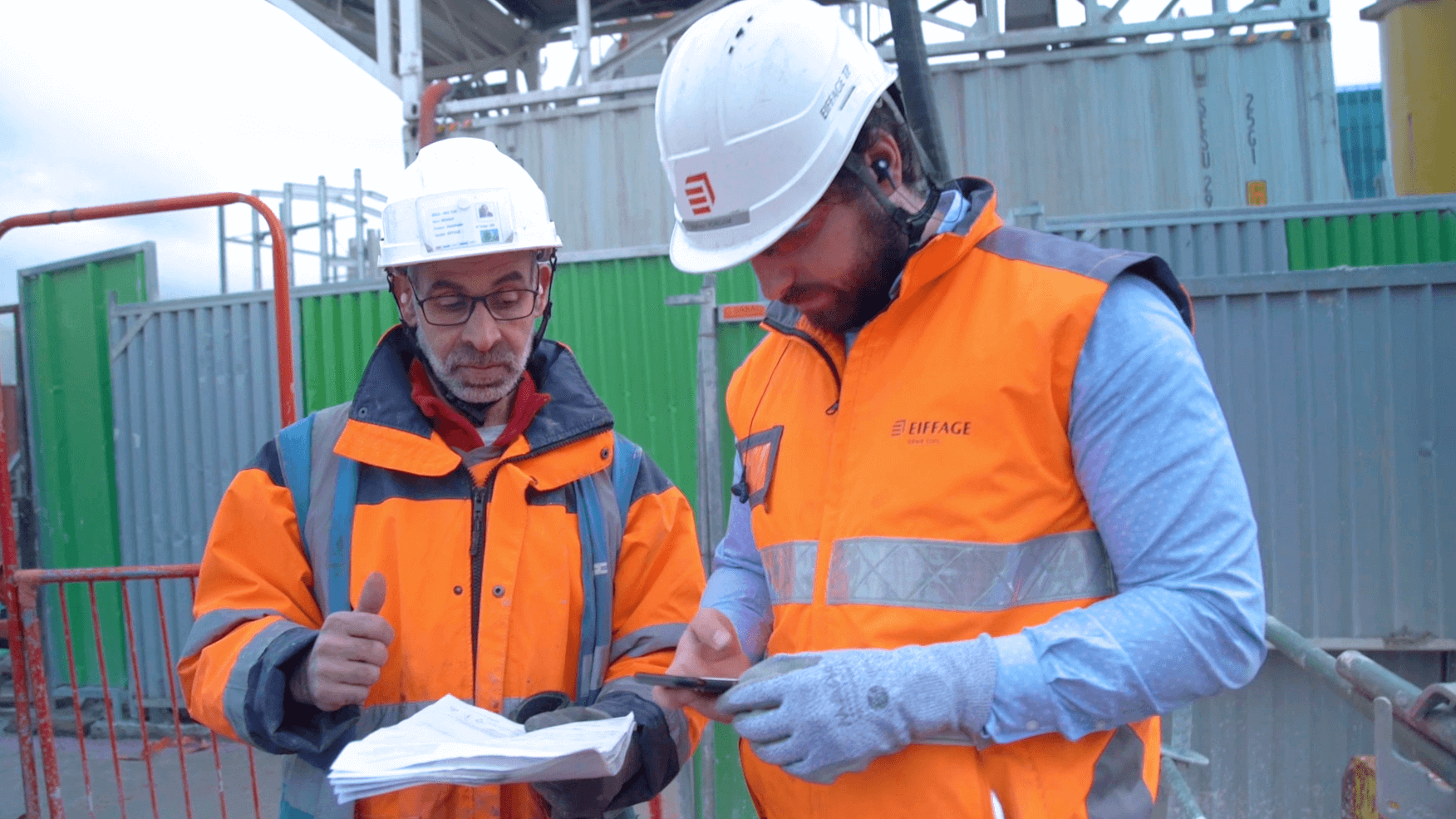
Construction director Antoine Cumunel commented, “I wanted to replace processes that generate paper. Managing paperwork takes a long time, you have to go back to the office, you have to write, sign, and scan it or create a distribution slip.”
Enhance control with technology
Enforcing control measures has traditionally been a manual task for teams to manage on-site. For example, works engineer Mathieu Roboam shared that even on just one site, he had to manage up to four different concrete formulations with different uses, all at the same time. Leveraging on a construction tracking software however, simplified matters tremendously, as all he needed to do was to scan a QR code and the Novade app would notify him if it was the correct formulation and use.
Furthermore, the Novade digital construction app synced seamlessly with their documentation, BIM system and 3D plan. Roboam said, “Within two to three months of use, we managed to have a tool which totally corresponded to our needs. I find that in this situation, digital technology does not take precedence over the human, but it helps us carry out all the checks that must be done every day.”
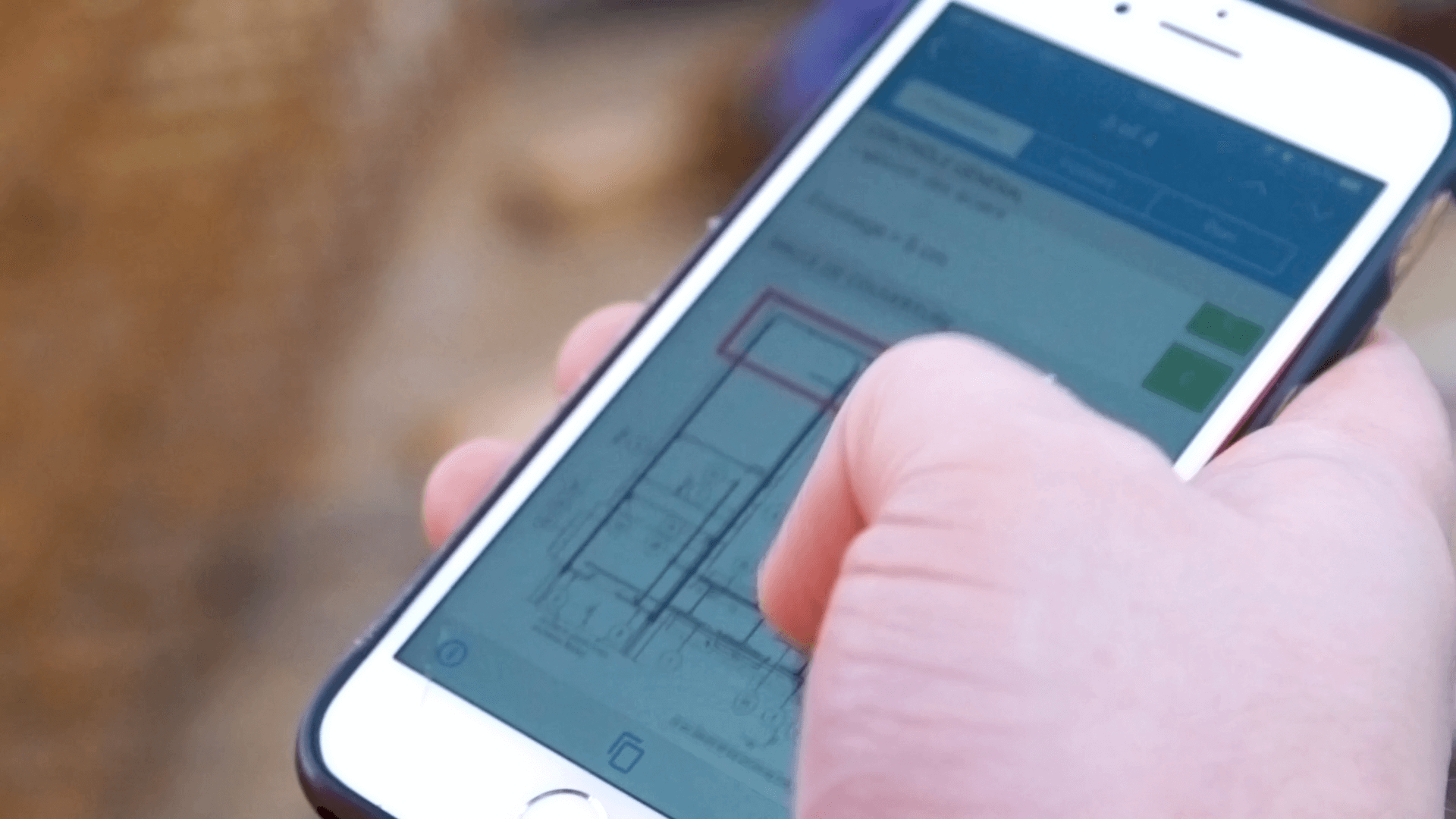
“For me, the level of control has been strengthened. We found a tool that corresponded with all our needs.”
– Mathieu Roboam, Works Engineer, Eiffage Génie Civil
Empower workers with digitalisation
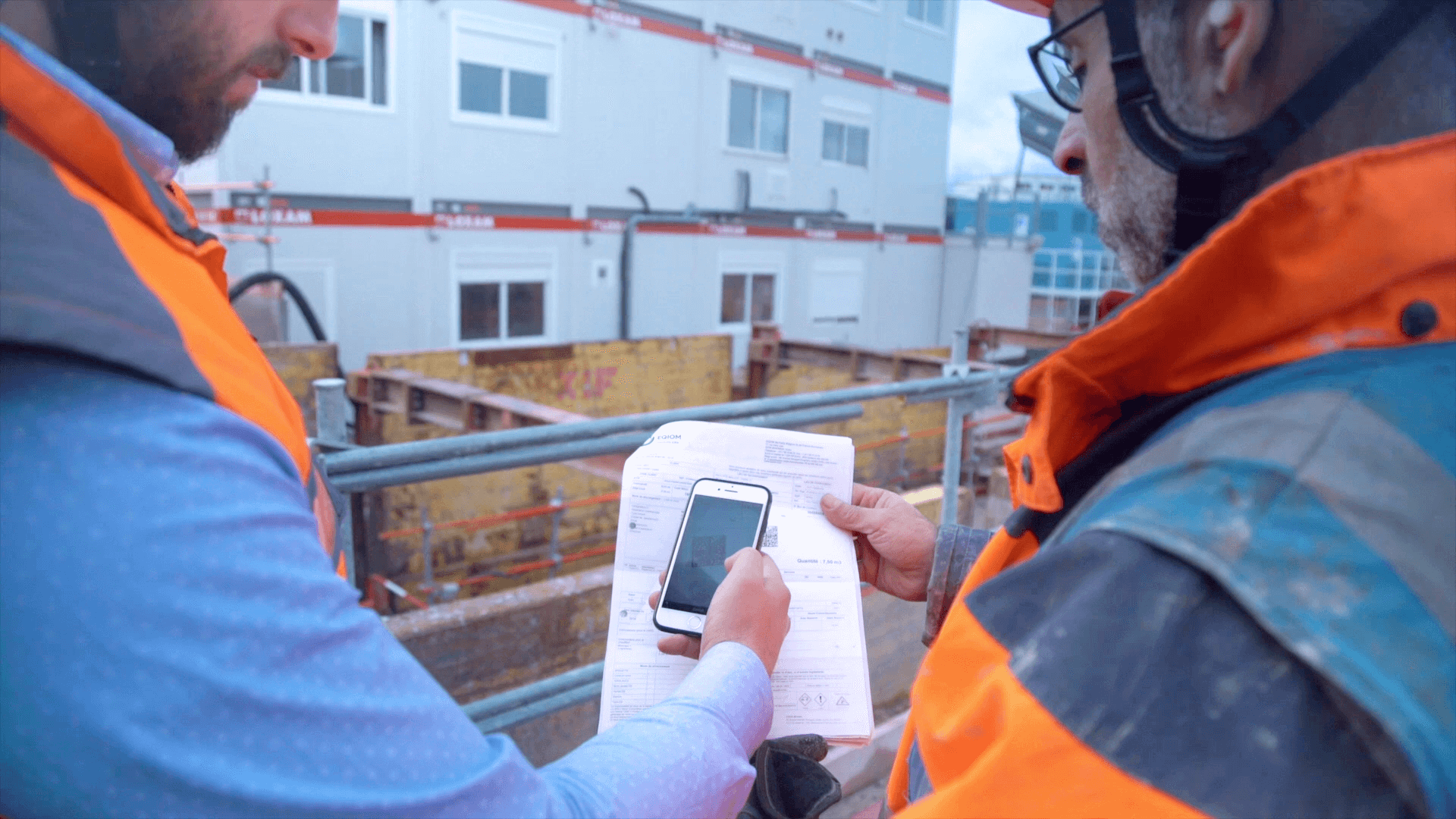
The advent of technology in the construction industry had been a long time coming. Digitalisation in the construction industry has made a large impact on day-to-day operations. Processes get streamlined and automated, human errors and duplicate labour get reduced, and workers both on-site as well as management in the office are empowered to perform more efficiently and effectively. Cumunel had this to say, “We communicated our specifications and realised that Novade’s deployment was surprisingly simple. Novade will not do our job for us. But it saves us a lot of time to help us do our jobs better.”
“Novade’s deployment was surprisingly simple. It will not do our jobs, but it saves us a lot of time to help us do our jobs better.”
– Antoine Cumunel, Construction Director, Eiffage Génie Civil