

Everybody is talking about ‘going digital’ these days. Why? Simply because digital tools remove site-based manual processes and replace them with efficient processes. This article explores what a Permit to Work system is, and gives strong reasons to adopt an electronic Permit to Work (ePTW) system. Plus, we share important tips for selecting a solution that’s right for your organisation.
What is a PTW system?
A Permit to Work (PTW) System is a formal process used to control potentially hazardous work. It is an essential part of safe work practices in industries like construction, manufacturing, utilities, mining, and energy. The PTW system ensures that all necessary safety checks are done before a job starts. It also ensures that everyone understands high-risk work activities, and the control measures in place.
The Permit to Work procedure typically includes these steps:
- Identification of the work and its hazards.
- Risk assessment and implementation of safety measures.
- Issuance of the permit by authorised personnel involved.
- Work execution under safe conditions.
- Ongoing monitoring and control of work procedures in real time.
- Closure of the permit upon job completion.
The most common types of work permits include hot work permits, confined space permits, electrical work permits, and permits for working at height.
What is an ePTW?
An ePTW (electronic Permit To Work) system modernises the traditional paper-based PTW process using digital tools. An ePTW system usually includes:
- A mobile app to simplify permit applications, assessments, and approvals.
- A desktop app to track permit status and view analytics.
- Secure digital storage to keep records safe and easily accessible for audits.
This modern approach makes the permit process faster, more efficient, and easier to manage.

Top 10 reasons to use an ePTW system
Moving to a digital system encompasses multiple benefits.
- Enhanced safety: e-permits ensure a safe execution and a standard approach to safety protocols, mitigating the risk of accidents and incidents.
- Contractual obligation: Some clients, projects or regulations may require the use of electronic permits for high-risk work.
- Improved compliance: With an ePTW system, adherence to safety management systems and regulatory requirements is consistently upheld.
- Reduced costs: The automation of data entry and reporting cuts expenses significantly.
- Increased accountability: Digital signatures can track who has responsibility for each step of the work.
- Improved productivity: The ePTW software speeds up the submission and permit approval process. No more time wasted chasing pieces of paper and approvals before commencing work.
- Environmental impact: ePTW systems use less paper, helping the environment.
- Simplified audits: Records can be kept in the cloud and easily retrieved, keeping your organisation audit-ready at all times; say goodbye to the thousands of manual permit to work forms.
- Analytics: Gain insights into permit trends, reasons for rejections, approval times and correlations between near misses and PTW applications.
- AI-driven insights: Use machine learning algorithms to analyse data collected in the field and prevent accidents on your construction sites.
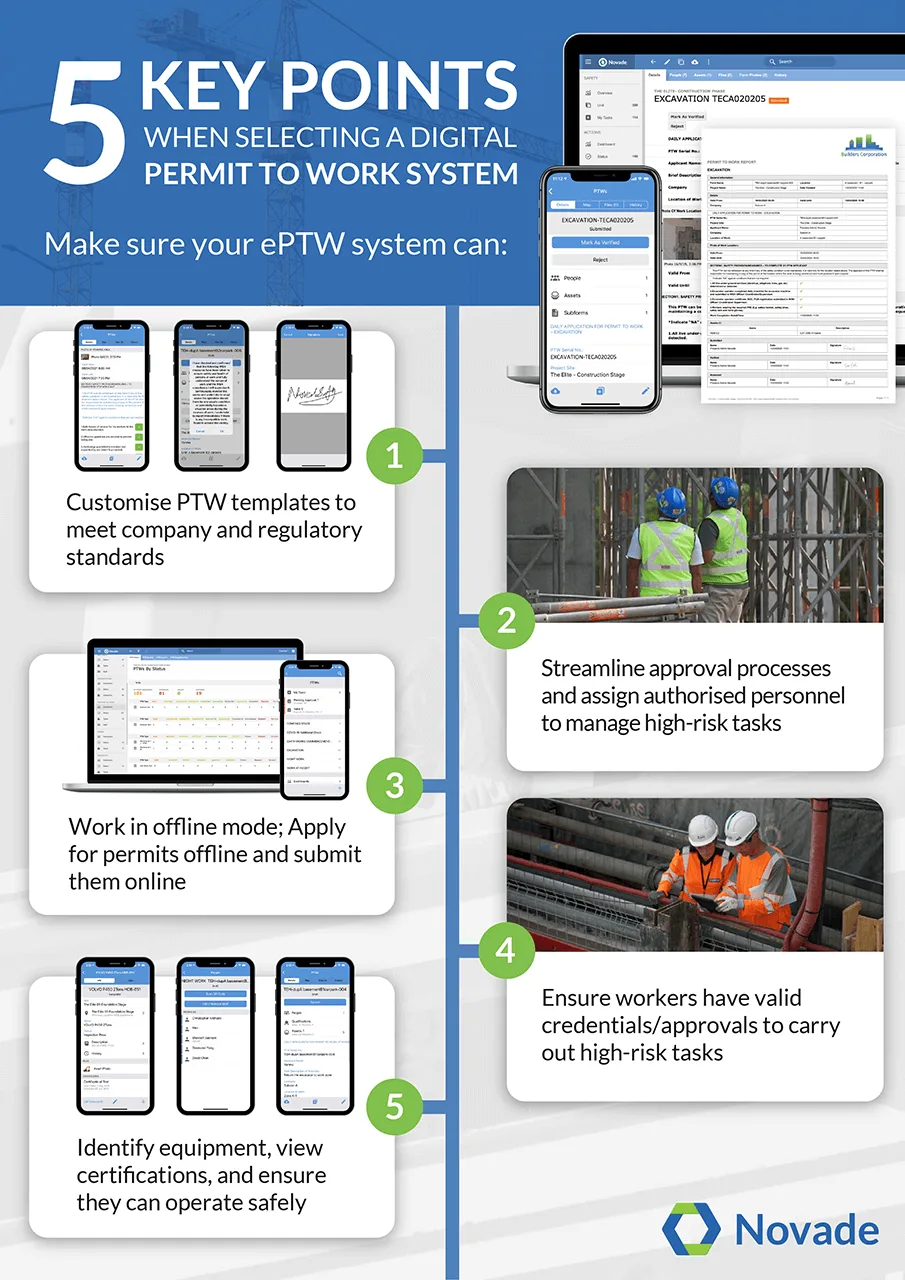
5 key points to keep in mind when selecting an ePTW system
- User-friendliness: Make sure the system is intuitive and user-friendly for all employees. The mobile app should continue working offline in areas with weak or no connectivity.
- Configuration capabilities: Permit-to-work processes can be complex and often require tailored assessments, checks and approval workflows. Choose a system that can be customised to meet your specific needs.
- Integration capabilities: The system should seamlessly integrate data, especially with human resources and assets, enabling automated controls on personal qualifications and machinery certifications.
- Security & reliability: Ensure the system has strong security features and is reliable with minimal downtime.
- Analytics capabilities & AI readiness: The ability to analyse data can significantly aid in identifying unsafe practices and potential issues. Furthermore, the rapid advancement in machine learning algorithms facilitates the development of models that can help prevent accidents.
Kickstart your digital journey today
Adopting an electronic Permit to Work system can improve efficiency, safety compliance and control of high-risk work. By replacing manual processes with configurable digital workflows, organisations can streamline approvals, improve visibility and maintain complete permit records. Selecting the right ePTW system is key to achieving these benefits across sites and projects.
Related content

How construction safety compliance software and AI improve HSE standards
Construction safety compliance has become increasingly complex. Contractors must manage risk assessments, permits to work, inspections, audits, workforce competency requirements and regulatory obligations across multiple projects…